Guides · Cedar Key, Florida
Living in Cedar Key: History, Population & What to Know
Cedar Key is a town of 756 people living in the shell of a 19th-century industrial port. Its quiet streets and vacant lots are the clearest record of the storm that ended its reason for being.
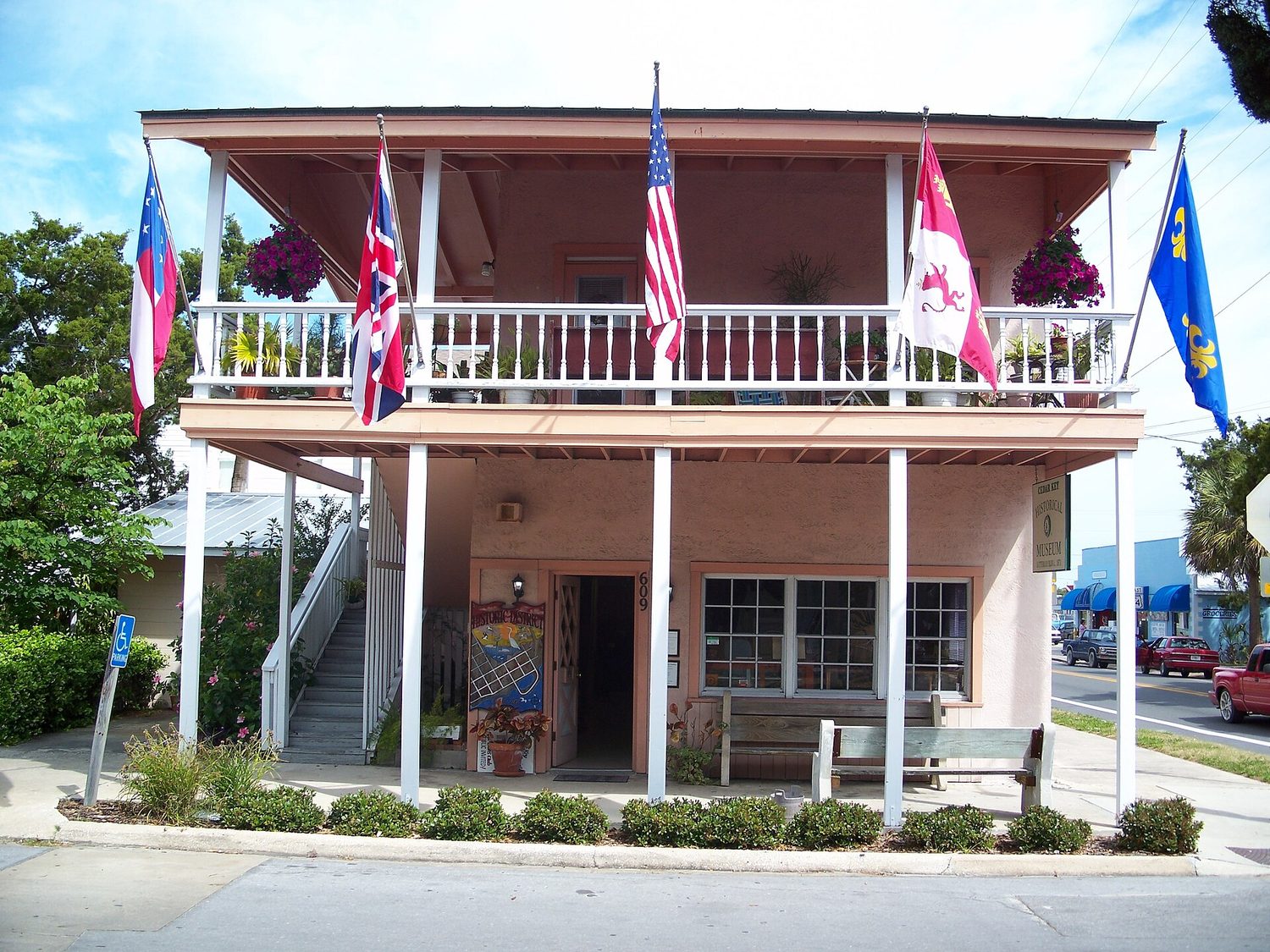
The Cedar That Built It
Augustus Steele bought the military structures on Atsena Otie Key in 1843 for $227, along with title to its 167 acres. He made the island the nucleus of the first organised settlement in the Cedar Keys. The name itself—Atsena Otie, meaning "cedar island" in the Creek language—was the promise the town would spend half a century keeping. The cedar that grew here gave the whole group of keys its name. It gave the town its industry.
Cedar milling was the making of the place. The Eberhard Faber mill, set up in 1865, cut red cedar slats for pencils. By 1886 the 17 sawmills at Cedar Key were turning out nearly half a million board feet a week. This was not a lumber town in the ordinary sense. It was a precision operation: the red cedar was soft, straight-grained, and fragrant, perfect for pencil slats. Cedar Key supplied the wood the world wrote with. Both the Eberhard Faber mill and the Eagle Pencil Company cut pencil slats here, shipping them out by rail and sea to be turned into the pencils of classrooms, offices, and counting houses across the country.
The town grew around that work. Way Key, Atsena Otie, and the other islands filled with mills, warehouses, boarding houses, and the families of the men who ran the saws. For a few decades, Cedar Key was not a refuge or a retirement post. It was a factory town on the water, and the factory made the world's writing instruments.
The Tidal Wave That Ended the Boom
The 1896 hurricane did not just damage Cedar Key. It ended the industry that justified the town's existence. The storm surge—which locals still call the tidal wave—rolled over the islands. The fire that followed finished what the water started. Both the Eberhard Faber mill and the Eagle Pencil Company were damaged so badly that they closed soon after.
On Atsena Otie Key, the island first settled, more than thirty-five houses on the high ground survived the surge. They stand today, or at least their remnants do, as a physical record of what the town was before the wave. The high ground saved them; the industry did not survive. The mills never reopened, the workers moved on, and Cedar Key began its long contraction from a place that made things to a place that simply exists.
A Population of 756, With Room for 819
The census numbers tell the story plainly. Cedar Key has 819 housing units and 756 people. That is not a rounding error; it is a vacancy rate of more than half.
| Measure | Number |
|---|---|
| Total housing units | 819 |
| Vacant housing units | 450 |
| Homes held for seasonal or recreational use | 269 |
| Population | 756 |
| Median age | 68.4 years |
Of the 819 units, 450 are vacant—not abandoned, necessarily, but empty. Of those, 269 are held for seasonal or recreational use. The median age of the people who do live here year-round is 68.4 years. This is a town that is smaller than its history, and increasingly part-time. The people who live here full-time are older. The houses around them are dark for much of the year, waiting for their owners to return.
The economic picture is not the picture of a struggling fishing village. Median household income is $69,226, median home value is $331,100, and median gross rent is $918. Unemployment is 4.2 percent, and 49.7 percent of residents hold a bachelor's degree or higher. These are not the numbers of a town in decline; they are the numbers of a town that has become something else. The mills are gone, but the people who remain are educated, employed, and comparatively comfortable—just few in number and old on average.
Where the Pencil Factories Stood
Walking Cedar Key today, the industrial past is mostly invisible. The Eagle Pencil Company site on Way Key at 3rd and G Streets is a patch of ground with no marker, no plaque, and no obvious remnant of the pencil boxes and cedar slats that were made there.
The same is true for much of the rest of the industrial footprint. The Eberhard Faber mill is gone. The sawmills are gone. The rail lines that carried the slats away are gone. What remains is the ground itself, the water, and the memory of what was built and lost in the space of half a century. The town has not preserved its industrial past in the way that other places might—there is no museum of the pencil trade, no interpretive trail through the mill sites. You have to know where to look, and you have to bring your own map.
The Seafood Festival and the Ghost of Seahorse Key
The one annual event that draws visitors to Cedar Key is the Cedar Key Seafood Festival, run by the Lions Club each October. It features more than 100 arts and crafts exhibits, live music, a Saturday parade at 11am, and food—clam chowder, oysters, and smoked mullet dip—that anchors the day in the town's present-day identity as a fishing community rather than its past as a milling one.
The festival matters for another reason: it is the rare chance to reach Seahorse Key, a historic island three miles out that is otherwise closed to the public. Seahorse Key is not part of the pencil story; its history is different, tied to a lighthouse and a wildlife refuge. But its presence on the festival's boat trips offers a glimpse of a Cedar Keys that most visitors never see. It reinforces the sense that this is a place defined by its islands and its water, not just by its streets.
What It Means to Live in a Place That Was Nearly Erased
To live in Cedar Key is to live in a town that outlived its own reason for existing. The cedar is gone, the mills are gone, and the population is a fraction of what it was at the height of the boom. But the town did not disappear. It contracted, reoriented, and settled into a smaller life.
The high education level and low unemployment suggest that the people who live here are not trapped; they have chosen this. The median age of 68.4 years suggests that many of them have chosen it for retirement, or for the quiet that comes after a working life elsewhere. The 450 vacant units and 269 seasonal homes mean that the town's rhythm is seasonal, keyed to the return of part-time residents and the October festival.
The question the town poses is not whether it will survive—it has already survived the tidal wave, the fire, and the departure of its industry. The question is what a place is for once its original purpose is gone. Cedar Key's answer is that it is for living, quietly and at a human scale, on the high ground that the 1896 storm could not wash away.
Common questions
- What happened to the cedar mills in Cedar Key?
- By 1886, 17 sawmills were cutting nearly half a million board feet of red cedar a week for pencils. The 1896 hurricane and fire damaged the Eberhard Faber and Eagle Pencil mills so badly they closed soon after, ending the industry.
- Is Atsena Otie Key the same as Cedar Key?
- No. Atsena Otie Key, meaning cedar island in Creek, was the first settled island, bought by Augustus Steele in 1843. The town of Cedar Key is on Way Key. Atsena Otie still has over 35 houses that survived the 1896 storm surge.
- How many people live in Cedar Key now?
- The population is 756 people, with a median age of 68.4 years. There are 819 housing units, but 450 are vacant and 269 are for seasonal or recreational use, so the year-round community is small.
- What is there to do during the Cedar Key Seafood Festival?
- Held each October by the Lions Club, it features over 100 arts and crafts exhibits, live music, a Saturday parade at 11am, and food like clam chowder and oysters. It's also your rare chance to visit Seahorse Key, normally closed to the public.
- Is Cedar Key an expensive place to live?
- The median home value is $331,100 and median gross rent is $918. Median household income is $69,226, with an unemployment rate of 4.2%. Nearly half of residents (49.7%) hold a bachelor's degree or higher.
- Can I visit the old pencil mill sites today?
- The Eagle Pencil Company site is on Way Key at 3rd and G Streets, where slats and pencil boxes were made. The Eberhard Faber mill was on Atsena Otie Key. Both were damaged in 1896 and closed, so little remains but the historical location.
Every business named above is one we hold a listing for, and every date traces to a source on our sources page. We do not describe menus, interiors or service we have not verified. Details change — confirm before you travel.