Guides · Cedar Key, Florida
Annual Events in Cedar Key: The Calendar That Matters
The town’s calendar is not a schedule. It is an act of memory.
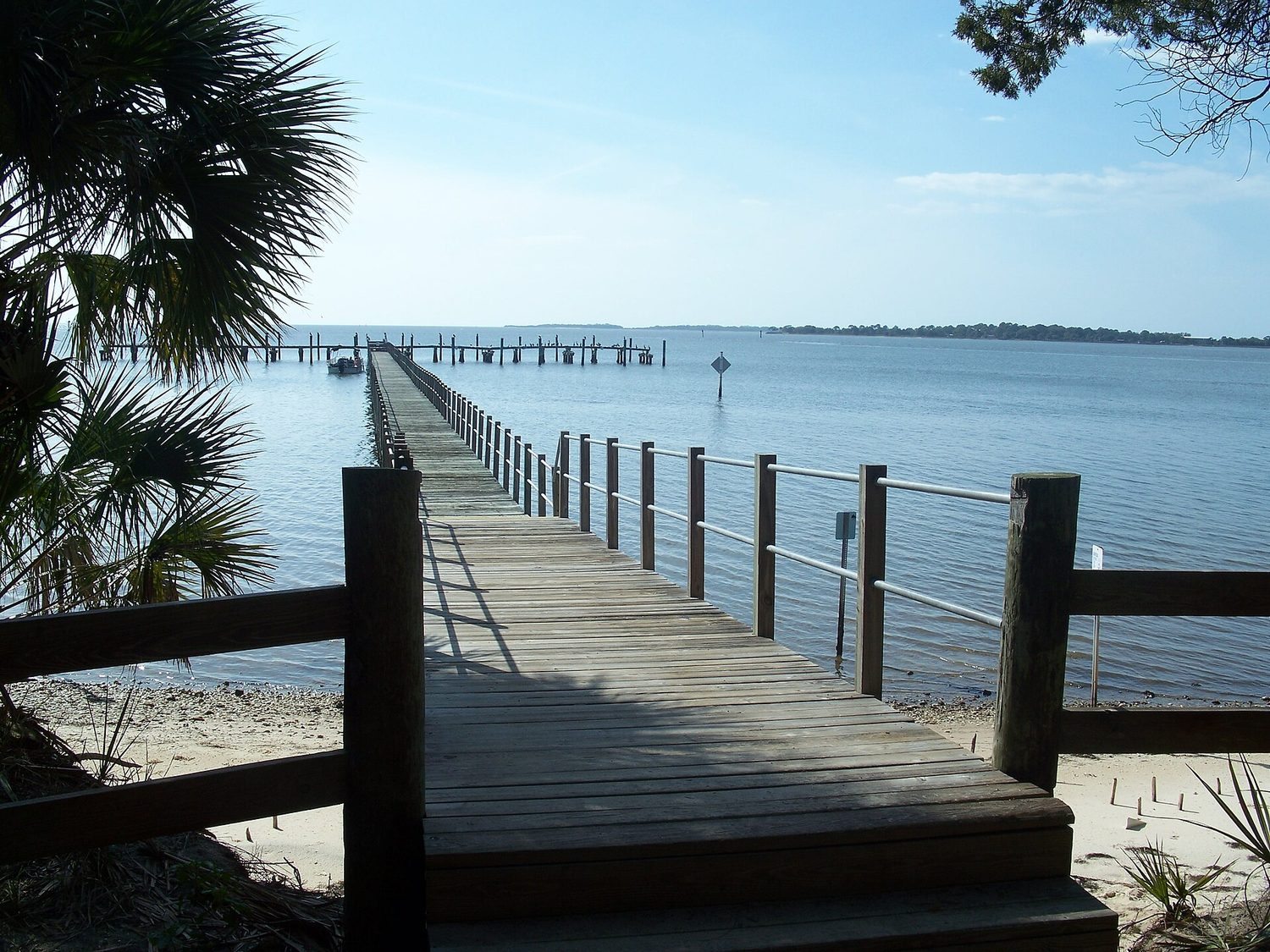
Nothing on Cedar Key happens fast, and almost nothing happens without reference to what came before. The population is 756 people, and the median age is 68.4 years. That is not a statistic so much as a statement of collective recall. These are people who remember the storm, or were raised by people who did.
The town is smaller than its history. Say so plainly.
Consider the numbers. There are 819 housing units on the key, and 450 of them sit vacant. Another 269 are held for seasonal or recreational use. The permanent population, the people who actually keep a calendar, is a fraction of the built footprint. This is not decline. It is a different kind of arithmetic.
The history is the load-bearing wall.
Augustus Steele bought the military structures on Atsena Otie Key in 1843 for $227, along with title to its 167 acres. The island became the nucleus of the first organised settlement in the Cedar Keys. Atsena Otie means cedar island in the Creek language—the cedar that gave the whole group of keys its name.
What happened next was not gentle. Cedar milling was the making of the town. The Eberhard Faber mill, set up in 1865, cut red cedar slats for pencils. By 1886, the 17 sawmills at Cedar Key were turning out nearly half a million board feet a week.
That is the number that matters: 500,000 board feet, every week, from a town that now holds 756 people.
Cedar Key supplied the wood the world wrote with. Both the Eberhard Faber mill and the Eagle Pencil Company cut pencil slats here until the 1896 hurricane and fire damaged both so badly that they closed soon after. The Eagle Pencil Company site on Way Key at 3rd and G Streets made cedar slats and pencil boxes. The streets are still there. The factory is not.
Atsena Otie Key, the island first settled, still holds the high ground. More than thirty-five houses on that island survived the 1896 storm surge that locals still call the tidal wave. The word is precise. They do not call it a hurricane or a storm. They call it the tidal wave, because that is what it was.
So what does a town like this put on its calendar?
One thing, mainly, and it is the right thing.
The Cedar Key Seafood Festival, run by the Lions Club each October, is the town’s annual gathering. More than 100 arts and crafts exhibits. Live music. A Saturday parade at 11am. Clam chowder, oysters, and smoked mullet dip.
The rare chance to reach Seahorse Key.
That last item is the one that carries the weight. Seahorse Key is a historic island three miles out, otherwise closed to the public. The festival is the only door. A town that lost its mills, its pencil slats, its half-million board feet a week, still holds a key to a locked island.
The festival is not a celebration of abundance. It is a gathering of survivors who know exactly what the water can do.
The median household income here is $69,226. The median home value is $331,100. The median gross rent is $918. The unemployment rate is 4.2 percent. Nearly half of residents—49.7 percent—hold a bachelor’s degree or higher.
These are not boomtown numbers. They are the numbers of a place that learned to live within its means after the boom was taken away.
A town of 756 people with 819 housing units does not need a busy calendar. It needs one good date, and it has it. October. The festival.
There is no parade in February. No spring art walk. No summer concert series invented to fill a brochure. Cedar Key does not perform its history for visitors; it simply holds it, and occasionally lets you in.
The calendar that matters is short. One festival. One island unlocked. One day when the town remembers that it was once the source of the world’s pencils, and now it is the source of something quieter.
The wood is gone. The sawmills are gone. The tidal wave is a memory carried by people who were not there, but were told.
What remains is October. And the boat to Seahorse Key.
Every business named above is one we hold a listing for, and every date traces to a source on our sources page. We do not describe menus, interiors or service we have not verified. Details change — confirm before you travel.