Guides · Cedar Key, Florida
The History of Cedar Key in 6 Landmarks
The storm that remade Cedar Key is still the town’s quiet clock, and these six places tell you why.
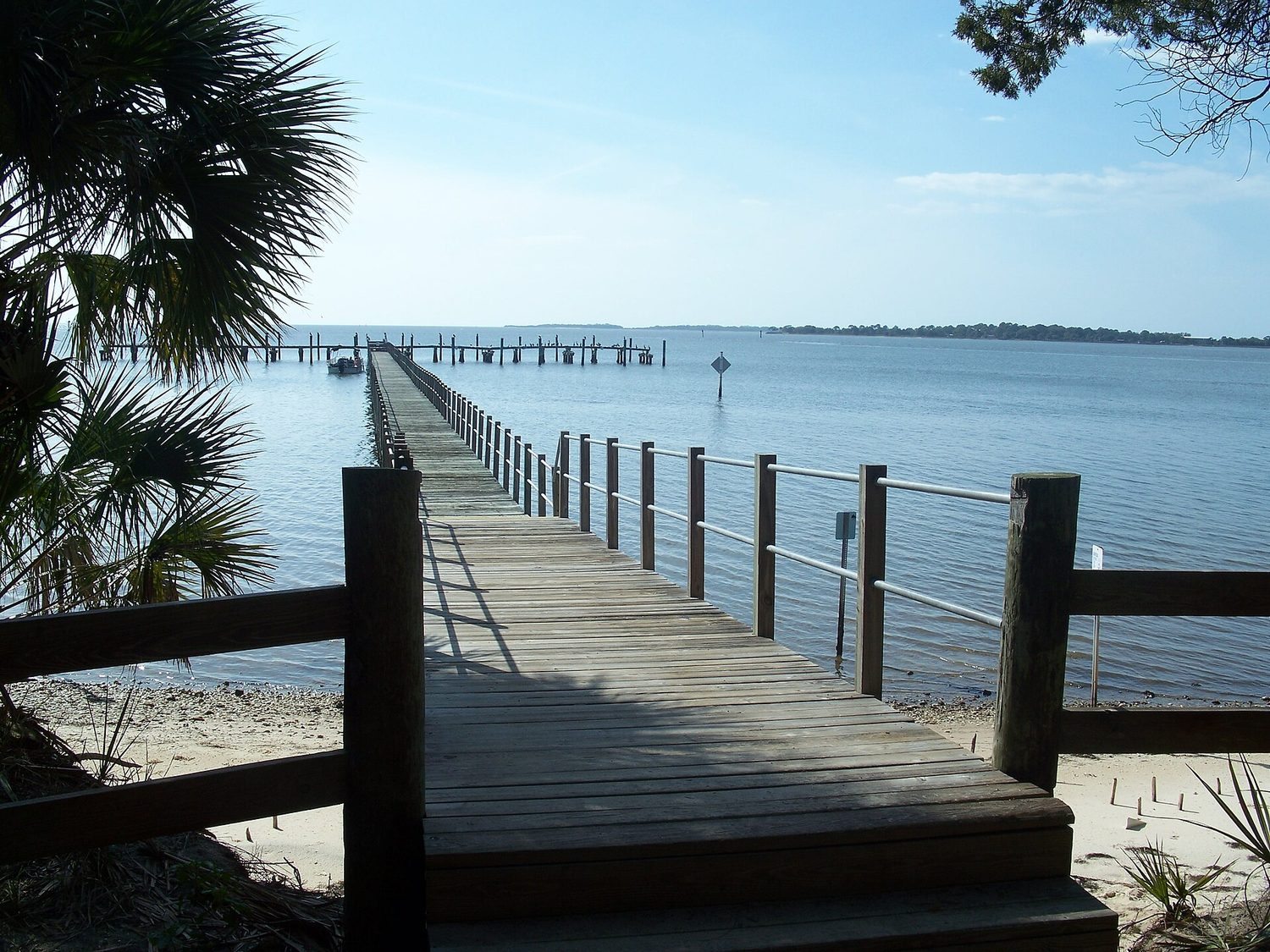
Atsena Otie Key
Everything starts on an island you can only reach by boat. In 1843, Augustus Steele bought the military structures there for $227, along with title to its 167 acres. That purchase made Atsena Otie the nucleus of the first organised settlement in the Cedar Keys.
The name is the argument. Atsena Otie means "cedar island" in the Creek language, and it is the cedar that gave the whole group of keys its name. The town did not invent itself. It borrowed from the tree.
More than thirty-five houses on the island’s high ground survived the 1896 storm surge. Locals still call that surge the tidal wave. The houses held. The island’s economy did not.
The Eberhard Faber Mill
The milling began in earnest in 1865, when the Eberhard Faber mill set up on the keys. It cut red cedar slats for pencils. That is a specific, unglamorous product, and it made this place matter.
By 1886, seventeen sawmills at Cedar Key were turning out nearly half a million board feet a week. Think about the arithmetic. Half a million board feet of cedar, every week, from a town that today holds 756 people. The scale is almost absurd.
This was not lumber for houses. This was lumber for writing. Cedar Key supplied the wood the world wrote with.
The Eagle Pencil Company Site
The Eagle Pencil Company also cut pencil slats here. Their site was on Way Key, at 3rd and G Streets. They made cedar slats and pencil boxes. Not pencils, exactly. The raw material and the packaging.
The 1896 hurricane and fire damaged both the Eberhard Faber mill and the Eagle Pencil Company so badly that they closed soon after. The storm did not just flood the town. It ended the industry that justified the town’s existence.
You can stand at 3rd and G Streets now and look at a vacant lot. The census counts 450 vacant housing units in Cedar Key. The town has more empty homes than occupied ones by a wide margin. That is not decay. That is the shape of a place that survived its own reason for being.
The High Ground
The houses that survived the tidal wave on Atsena Otie were on high ground. That detail matters more than any other in this history. The people who settled here understood the water before the storm taught them what it could do.
Today, 269 of the town’s 819 housing units are held for seasonal or recreational use. A third of the homes are second homes. The median age here is 68.4 years. The town is smaller than its history. It is also older, slower, and more deliberate.
The median home value is $331,100. The median gross rent is $918. The unemployment rate is 4.2 percent. These are not boomtown numbers. They are the numbers of a town that has stopped trying to be anything other than what it is.
The Seafood Festival Route
Every October, the Lions Club runs the Cedar Key Seafood Festival. More than 100 arts and crafts exhibits, live music, a Saturday parade at 11am. The food is specific: clam chowder, oysters, smoked mullet dip.
The festival is also the rare chance to reach Seahorse Key, a historic island three miles out that is otherwise closed to the public. So the event does double work. It feeds the town and it opens the water.
49.7 percent of residents hold a bachelor’s degree or higher. That is a striking figure for a town of 756 people. It suggests a population that chose this place rather than inherited it. The festival is part of that choice.
The Empty Water
The final landmark is not a building. It is the absence of one. Seventeen sawmills became none. Half a million board feet a week became zero. The industry that gave the town its name and its purpose is gone.
The cedar is still there. The keys still carry the name. The water still works on the shorelines of Atsena Otie and Way Key. The storm of 1896 is still the reference point for everything that happened after.
Cedar Key today is a town of 756 people, 450 vacant housing units, and a median age that suggests most of its residents remember a different Florida. The history is not in the buildings. Most of the buildings are gone. The history is in the arrangement of the land, the names on the charts, and the fact that people still come here in October to eat smoked mullet dip and look out at an island that was once the center of the world’s pencil supply.
The wood the world wrote with is gone. The place that produced it remains. That is the whole story, and it is enough.
Every business named above is one we hold a listing for, and every date traces to a source on our sources page. We do not describe menus, interiors or service we have not verified. Details change — confirm before you travel.