Guides · Cedar Key, Florida
Towns to Add to a Cedar Key Trip: Festivals & Day Trips
**Cedar Key lives on the far side of its own legend; the towns around it are still writing theirs.**
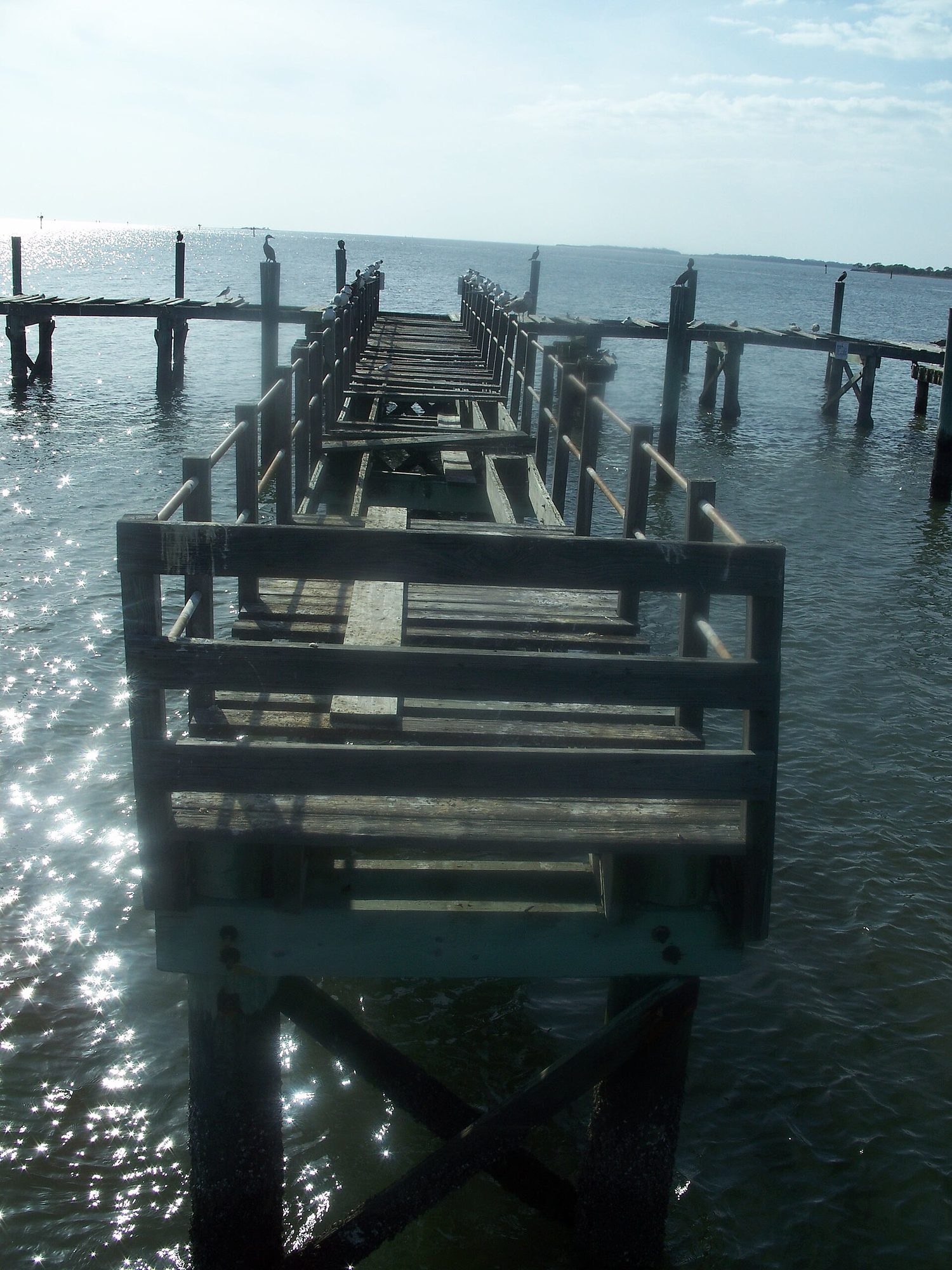
Cedar Key's History and Why It Feels Like a Ghost Town
Cedar Key is not a place you visit so much as a place you read. The population is 756 people, with a median age of 68.4 years, and 450 of its 819 housing units sit vacant. That is more than half the town empty, and most of that emptiness is seasonal—269 units are held for recreational use. The median home value is $331,100, the median gross rent is $918, and nearly half the adults hold a bachelor’s degree. The unemployment rate is 4.2 percent. These are numbers that describe a place that has already happened.
What happened is this: Augustus Steele bought the military structures on Atsena Otie Key in 1843 for $227, along with title to its 167 acres. Atsena Otie means "cedar island" in the Creek language—the cedar that gave the whole group of keys its name. That island became the nucleus of the first organised settlement in the Cedar Keys. The Eberhard Faber mill set up in 1865, cutting red cedar slats for pencils. By 1886, seventeen sawmills at Cedar Key were turning out nearly half a million board feet a week. Cedar Key supplied the wood the world wrote with. Both the Eberhard Faber mill and the Eagle Pencil Company cut pencil slats here until the 1896 hurricane and fire damaged both so badly that they closed soon after. On Atsena Otie Key, more than thirty-five houses on the high ground survived the 1896 storm surge that locals still call the tidal wave. The Eagle Pencil Company site on Way Key at 3rd and G Streets is where the cedar slats and pencil boxes were made.
The town is smaller than its history. That is the whole point. And the towns around it are smaller still, but they have not yet been reduced to a single sentence. That is why you add them to the trip.
Steinhatchee's Fiddler Crab Festival: A Working River Town
Steinhatchee is 44 miles north, and it is the closest thing Cedar Key has to a mirror image that refuses to blink. Cedar Key looks back; Steinhatchee looks at the tide. The Fiddler Crab Festival is its annual release valve, and it draws a crowd that does not care about pencil mills or storm surges. It is a working river town that still sells bait and gas to people who actually fish.
Where Cedar Key’s festival—the Cedar Key Seafood Festival, run by the Lions Club each October—offers more than 100 arts and crafts exhibits, live music, a Saturday parade at 11am, and the rare chance to reach Seahorse Key, a historic island three miles out that is otherwise closed to the public, Steinhatchee’s festival is less curated. It is a mud-boot affair, and that is not an insult. The Fiddler Crab Festival is about the fiddler crabs themselves, which swarm the flats in numbers that look like the ground has moved. You do not need a menu to understand the appeal. You need a pair of old shoes and an appetite for something that was alive an hour ago.
Perry's Florida Forest Festival: Timber Heritage Alive
Perry is 76 miles northeast, and it is the closest thing to Cedar Key’s industrial past that still has a pulse. The Florida Forest Festival is its annual event, and it celebrates timber. That is worth sitting with for a moment. Cedar Key was built on timber; Perry still is. The difference is that Perry’s sawmills did not die in a storm. They just kept cutting.
The Florida Forest Festival is a parade, a forestry competition, and a chance to see the industry that Cedar Key lost in 1896 still operating with the same boots and sawdust. If you come from Cedar Key, you will recognise the materials. You will not recognise the continuity. Perry’s festival is not a memory; it is a schedule.
Dade City's Kumquat Festival: A Unique Florida Day Trip
Dade City is 80 miles southeast, and the Kumquat Festival is its claim to fame. This is a festival built on a fruit that most people have never tasted, and that is exactly why it works. The kumquat is not a citrus fruit you eat like an orange; it is a fruit you eat peel and all, and the sweetness is in the rind. That is a metaphor for the town itself.
The Kumquat Festival is a small-town street fair with a specific focus, and it is a useful palate cleanser after Cedar Key’s elegiac mood. Cedar Key is about what was. Dade City is about what is—specifically, a fruit that most of Florida ignores. It is a day trip that reminds you that Florida is still full of places that have not been reduced to a single story.
Mount Dora Arts Festival and Craft Fair: A Day Trip from Cedar Key
Mount Dora is 100 miles away, and it hosts both the Mount Dora Arts Festival and the Mount Dora Craft Fair. This is the odd one out on this list, because Mount Dora is not a working town in the way Steinhatchee or Perry are. It is a town that has become a destination for its own sake, and its festivals reflect that. The Arts Festival is a juried show that draws serious artists; the Craft Fair is a more democratic affair.
The point of Mount Dora is that it is the opposite of Cedar Key in one crucial way: it has not lost anything. It has gained, steadily, and its festivals are about accumulation rather than memory. If Cedar Key is a ghost story, Mount Dora is a success story. Both are worth a day.
Clermont's Pig on the Pond: Barbecue and Music Near Cedar Key
Clermont is also 100 miles away, and the Pig on the Pond festival is exactly what it sounds like. It is a barbecue competition, a carnival, and a live music event. It is not subtle. It is not historic. It is a festival that knows exactly what it is and does not apologise for it.
The Arithmetic of a Day Trip
The census says Cedar Key has 450 vacant housing units out of 819 total. That is a town where more than half the roofs are empty at any given moment. The median age is 68.4 years. The median household income is $69,226. These are not the numbers of a place that is going to change much. They are the numbers of a place that has settled into its own aftermath.
The towns around Cedar Key are not like that. Steinhatchee is still working. Perry is still cutting. Dade City is still growing a fruit nobody else wants. Mount Dora is still collecting. Clermont is still cooking. None of them are as historically significant as Cedar Key, and none of them are as haunted. That is what makes them worth the drive. Cedar Key is a sentence you have already read. The other towns are paragraphs you can still write.
The seventeenth sawmill closed more than a century ago. The pencil slats stopped shipping. The tidal wave receded. But the road out of Cedar Key is still open, and the festivals are still on the calendar. That is the only promise a town can keep.
Common questions
- What happened to the cedar mills in Cedar Key?
- The cedar mills made Cedar Key. By 1886, 17 sawmills cut nearly half a million board feet a week, supplying pencil slats to Eberhard Faber and Eagle Pencil. The 1896 hurricane and fire damaged both companies so badly they closed soon after.
- Is Atsena Otie Key worth visiting?
- Atsena Otie Key is where Cedar Key began. Augustus Steele bought it in 1843 for $227, and it became the first settlement. More than 35 houses on high ground survived the 1896 tidal wave. It's a historic, quiet island to explore.
- How big is Cedar Key now?
- Cedar Key is small—756 people with a median age of 68.4. There are 819 housing units, but 450 are vacant and 269 are seasonal. It's a town smaller than its history, with a median home value of $331,100.
- What is there to do during the Seafood Festival?
- The Cedar Key Seafood Festival, run by the Lions Club each October, has over 100 arts and crafts exhibits, live music, an 11am Saturday parade, and food like clam chowder and smoked mullet dip. It's also your rare chance to visit Seahorse Key, usually closed to the public.
- Can I see where pencils were made?
- Yes, the Eagle Pencil Company site is on Way Key at 3rd and G Streets, where cedar slats and pencil boxes were made. It's a piece of the town's pencil-making past, though the mills closed after the 1896 hurricane.
- What nearby towns are good for a day trip?
- Steinhatchee is 44 miles away with its Fiddler Crab Festival, Perry 76 miles has the Florida Forest Festival, Dade City 80 miles has the Kumquat Festival, and Mount Dora 100 miles offers arts and craft fairs. Clermont, also 100 miles, hosts Pig on the Pond.
Every business named above is one we hold a listing for, and every date traces to a source on our sources page. We do not describe menus, interiors or service we have not verified. Details change — confirm before you travel.