Guides · Cedar Key, Florida
The Best Time of Year to Visit Cedar Key
The best time to visit Cedar Key has less to do with weather than with what you are willing to admit the town has become.
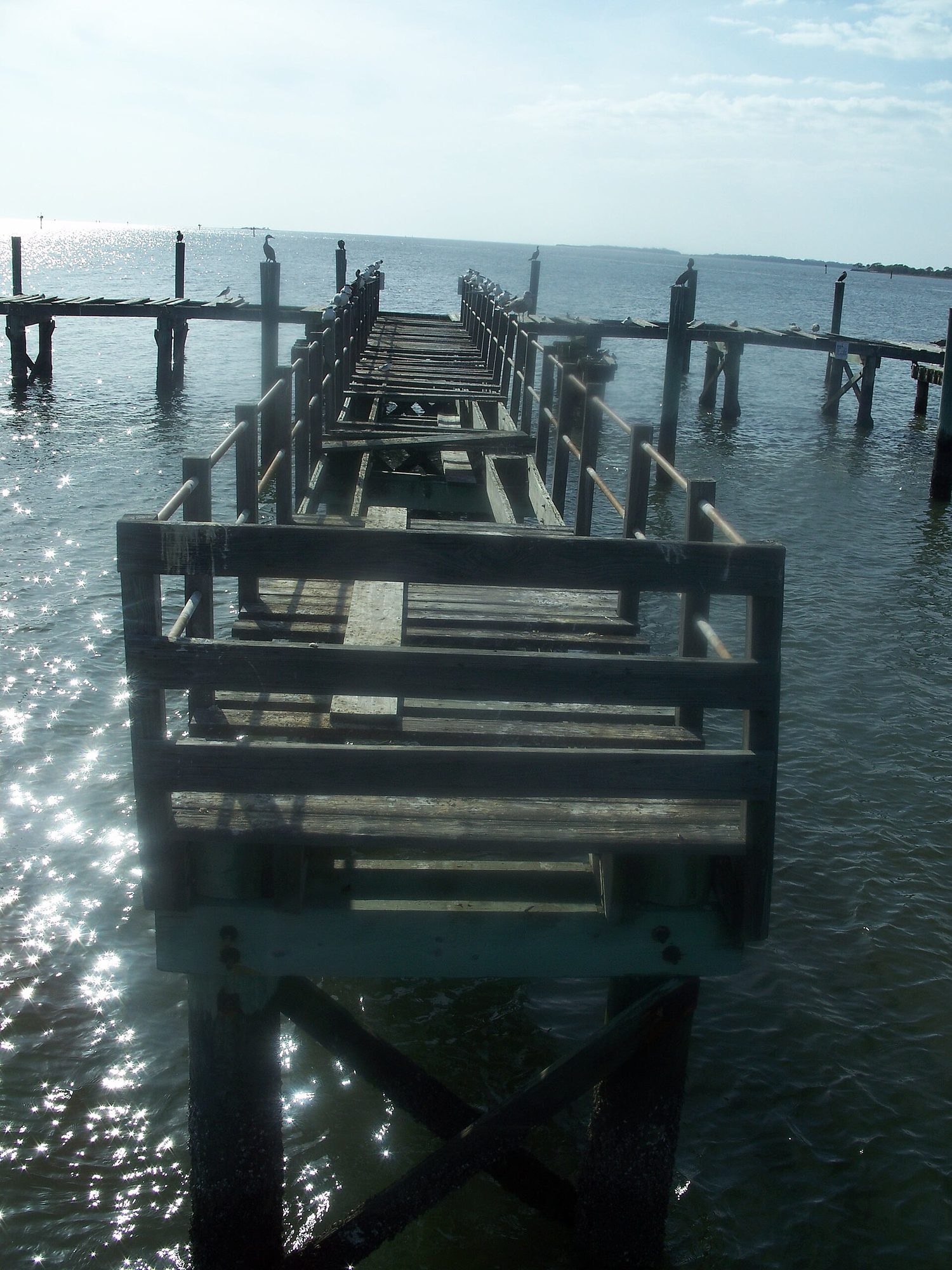
The Season of Empty Porches
Start with the numbers, because they tell a story the brochures won't. Cedar Key has 819 housing units. Of those, 450 sit vacant. Another 269 are held for seasonal or recreational use. That leaves roughly one hundred units for a permanent population of 756 people, whose median age is 68.4 years.
The town is smaller than its history. You feel it in the off-season, from January through March, when the air is cool and the streets are quiet. The docks are not crowded. The restaurants are easy. The sun sets early and the Gulf is gray-green and serious. This is the time for the traveler who wants to see the place as it actually is: a working water town that has been through storms and has the scars to prove it.
The Pencil Town Paradox
Cedar Key did not grow because of its beaches. It grew because of its trees. Atsena Otie Key—the name means cedar island in the Creek language—was the nucleus of the first organised settlement in the Cedar Keys. Augustus Steele bought the military structures there in 1843 for $227, along with title to its 167 acres. The island gave the whole group of keys its name, and the cedar gave the town its purpose.
The Eberhard Faber mill, set up in 1865, cut red cedar slats for pencils. By 1886, the 17 sawmills at Cedar Key were turning out nearly half a million board feet a week. This was the wood the world wrote with. The Eagle Pencil Company site on Way Key at 3rd and G Streets made cedar slats and pencil boxes. Both mills operated until the 1896 hurricane and fire damaged them so badly that they closed soon after.
You can walk those streets now. The mill is gone. The industry is gone. What remains is the shape of the town, the grid of streets, the high ground where more than thirty-five houses on Atsena Otie Key survived the storm surge that locals still call the tidal wave.
The October Exception
If you want the town at its most alive, come in October for the Cedar Key Seafood Festival, run by the Lions Club. It is the rare chance to reach Seahorse Key, a historic island three miles out that is otherwise closed to the public. The festival brings more than 100 arts and crafts exhibits, live music, and a Saturday parade at 11am. The island ferry runs. The town fills with visitors.
This is not the quiet Cedar Key. It is the loud one, the one that remembers what it was like to be a destination. And for one weekend, the vacant units are occupied, the docks are busy, and the town feels like a town again.
The Honest Answer
The best time to visit Cedar Key depends on what you are looking for. If you want the festival, the crowds, and the boats, come in October. If you want to understand the place, come in the dead of winter, when the median age of 68.4 years is visible on every bench and every dock.
The census says the unemployment rate is 4.2 percent. The median household income is $69,226. The median home value is $331,100. The median gross rent is $918. Nearly half the adults hold a bachelor's degree or higher. These are not the numbers of a struggling fishing village. They are the numbers of a place that has been discovered, partially, and then left alone.
Cedar Key is a town of 756 people and 819 houses. Most of those houses are empty most of the year. The best time to visit is whenever you can accept that emptiness as part of the landscape. The cedar is gone. The mills are gone. The storm came and the storm will come again. What is left is a small town on the edge of the Gulf, waiting for the next boat, the next festival, the next season.
Come in October if you want to see it full. Come in February if you want to see it true.
Every business named above is one we hold a listing for, and every date traces to a source on our sources page. We do not describe menus, interiors or service we have not verified. Details change — confirm before you travel.