Guides · Cedar Key, Florida
Museums and Historic Sites in Cedar Key
The town is smaller than its history; say so.
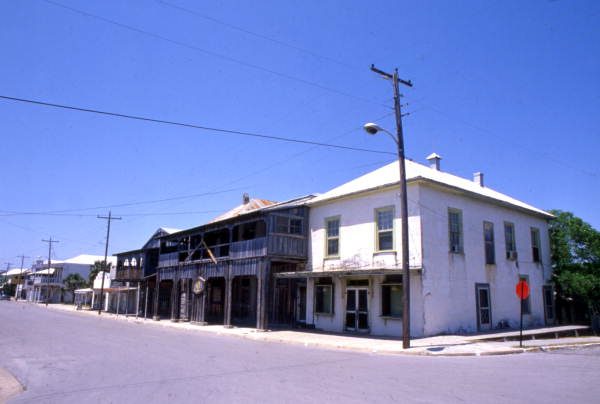
Seventeen sawmills once cut nearly half a million board feet a week here, and the wood went out into the world as pencils. Cedar Key now holds 756 people. The mills are gone. What remains is a set of places that ask you to look at the water and do the arithmetic yourself.
The Historical Society
Start at Cedar Key Historical Society, 609 2nd Street, where the town keeps its own record. The rating is 4.8 from 205 reviews, which is about as close to consensus as this town gets. It sits at the corner of FL-24, which is the road you came in on and will leave by. The museum does what a good small museum should: it lays out the timeline without pretending the timeline was gentle.
The facts are stark. Augustus Steele bought the military structures on Atsena Otie Key in 1843 for $227, along with title to its 167 acres. That island became the nucleus of the first organised settlement in the Cedar Keys. The name itself is the clue: Atsena Otie means cedar island in the Creek language. The cedar that gave the keys their name is the cedar that built the town.
The Wood
The Eberhard Faber mill set up in 1865 and cut red cedar slats for pencils. By 1886, the 17 sawmills at Cedar Key were turning out nearly half a million board feet a week. This is the part that sounds like exaggeration and is not. Cedar Key supplied the wood the world wrote with: both the Eberhard Faber mill and the Eagle Pencil Company cut pencil slats here until the 1896 hurricane and fire damaged both so badly that they closed soon after.
The Eagle Pencil Company site is on Way Key at 3rd and G Streets. There is no marker there now. You can stand on the corner and know what was made there: cedar slats and pencil boxes. That is all the data gives you, and it is enough.
The Island
Rosewood Historic Marker is not on Cedar Key proper. It is on the mainland side, and the rating is 4.8 from 28 reviews. The marker is what it says: a marker. It does not recreate anything. It stands in the landscape and lets the landscape do the talking. The Rosewood story is not a Cedar Key story, but it is a Levy County story, and the marker belongs in any honest tour of this county's difficult ground.
For the lighthouse, you have to go to the water. Cedar Keys (Seahorse Key) Lighthouse is listed under Cedar Key highpoint #2, rated 4.8 from 14 reviews. Seahorse Key is three miles out, and it is the rare chance to reach it that comes each October.
The Festival
The Cedar Key Seafood Festival, run by the Lions Club, happens each October. More than 100 arts and crafts exhibits, live music, a Saturday parade at 11am. The food is clam chowder, oysters and smoked mullet dip. But the real draw is the boat: the festival is the one time of year you can get to Seahorse Key, which is otherwise closed to the public.
That is the shape of this town. The lighthouse you can see but rarely visit. The island first settled, Atsena Otie Key, where more than thirty-five houses on the high ground survived the 1896 storm surge that locals still call the tidal wave. The mill sites you can walk over without knowing it.
The Numbers
The census figures do the elegy for you. Total housing units: 819. Homes held for seasonal or recreational use: 269. Vacant housing units: 450. That means more than half the houses in town are empty most of the year. Median age: 68.4 years. Population: 756. This is a town that has thinned out, and the thinning is visible from the dock.
But the median home value is $331,100, and the median gross rent is $918. Bachelor's degree or higher: 49.7 percent. Unemployment: 4.2 percent. Median household income: $69,226. The town is not poor, and it is not uneducated. It is simply small, and it is small because the industry left, and the industry left because the storm came, and the storm came because it always does.
The 1896 hurricane did not just close the mills. It changed the scale of the place. The mills closed soon after, and the town never got back to half a million board feet a week. It got back to being a place where people live, and where other people come to look at what the water did and what the water made.
What to Do With This
Visit the Historical Society first. It gives you the frame. Then drive to the Rosewood marker and sit with that. Then go to the waterfront and look out at Seahorse Key, knowing you will likely not get there except in October. Walk 3rd and G Streets and know the pencil boxes came from that corner.
This is not a museum town in the sense of polished exhibits and gift shops. It is a town that is itself the exhibit. The museums and markers are just the captions. The town is smaller than its history, and the history is written in cedar, most of it cut down and shipped out, some of it still standing on Atsena Otie Key.
Go when the festival is on, if you can. Go in October, when the boats run to Seahorse Key and the town fills with the living. The rest of the year, the 450 vacant houses and the 269 seasonal homes hold the silence. The lighthouse stands out there, three miles of water away, and the town stands here, 756 people strong, remembering what it wrote the world with.
Every business named above is one we hold a listing for, and every date traces to a source on our sources page. We do not describe menus, interiors or service we have not verified. Details change — confirm before you travel.