Guides · Cedar Key, Florida
Golf around Cedar Key
The town of Cedar Key is smaller than its history, and the golf here is a way to measure the distance between the two.
The Course Is the Cart
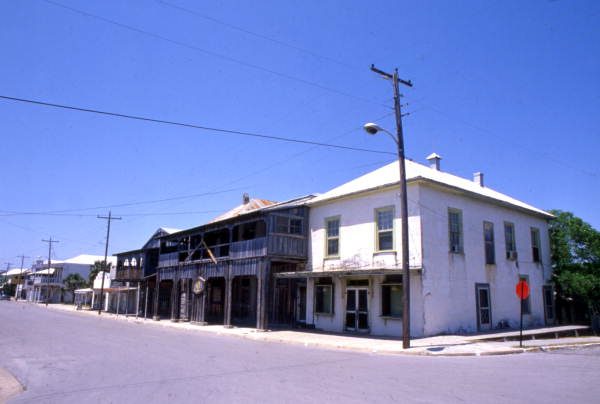
There is no fairway in Cedar Key. No green, no flagstick, no sand trap shaped by a man with a rake. The golf of this town is the golf cart, and the course is the island grid of streets that survived when the sawmills did not.
Two outfits rent them. Cedar Key Golf Carts and Bikes LLC sits at 357 2nd St, and Cedar key adventures golf cart and kayak rental works out of 609 1st St. Both hold a perfect 5.0 rating from their reviewers—180 for the former, 44 for the latter. Read that as you will. People do not rate their rented golf cart poorly; they rate the feeling of the wind and the salt and the low sun. The carts are the vehicle for that feeling.
What the Streets Remember
The town's 756 residents live among 819 housing units, and 450 of those units sit vacant. More than a third of the homes are held for seasonal or recreational use. The median age is 68.4 years. That is a town that has outlived its own industry and now waits, politely, for people to come back and ride through it.
The streets themselves are the memorial. At 3rd and G Streets on Way Key, the Eagle Pencil Company once cut cedar slats and built pencil boxes. The Eberhard Faber mill had arrived in 1865, and by 1886 seventeen sawmills were turning out nearly half a million board feet a week. The wood went out to the world, and the world wrote with it. Then the 1896 hurricane and fire damaged both mills so badly they closed soon after. The mills are gone. The streets remain. You can drive them in forty minutes, maybe less, and that is the point.
The Island You Cannot Play
The first organised settlement in the Cedar Keys was on Atsena Otie Key, which Augustus Steele bought in 1843 for $227, along with title to its 167 acres. The name comes from the Creek language and means "cedar island"—the cedar that gave the whole group of keys its name. More than thirty-five houses on that island's high ground survived the 1896 storm surge, the one locals still call the tidal wave.
You cannot take a golf cart there. There is no bridge. But once a year, the Cedar Key Seafood Festival in October runs a rare chance to reach Seahorse Key, a historic island three miles out that is otherwise closed to the public. The festival itself is run by the Lions Club, with more than 100 arts and crafts exhibits, live music, and a Saturday parade at 11am. The clam chowder, oysters, and smoked mullet dip are traditional. The boat ride is the real draw. You will not need a cart on Seahorse Key. You will need your legs.
The Numbers of a Town That Slowed
Cedar Key is not a retirement community by design. It is a retirement community by exhaustion. The median household income is $69,226. The median home value is $331,100. The median gross rent is $918. Unemployment sits at 4.2 percent. Nearly half the residents—49.7 percent—hold a bachelor's degree or higher. These are not the numbers of a beach town that never worked. They are the numbers of a working town that was told its work was done.
The golf cart rental is the town's quiet concession to that reality. At a median age of 68.4 years, walking the full circuit is not always possible. The cart is the tool that lets a person see the whole story in an afternoon: the empty lots where the mills stood, the high ground where the houses survived, the water that took the rest.
How to Play
Take a cart from either rental. Ride south first, toward the Gulf. The roads narrow. The water appears between houses, then disappears, then returns. You will pass the docks and the seafood houses and the small museum that tells the pencil story better than any plaque. Then loop back through the residential streets, where the seasonal homes are shuttered and the year-round ones have boats in the driveways.
Do not rush. The course is only a few miles long, but the history beneath it is deeper than the draft of any boat in the harbor. The sawmills are gone. The pencils are in drawers somewhere, half-used. What remains is a town of 756 people and a few hundred golf carts, rolling slowly past the places where the world's words were made. Play the round. It is the only way to understand what the storm took.
Every business named above is one we hold a listing for, and every date traces to a source on our sources page. We do not describe menus, interiors or service we have not verified. Details change — confirm before you travel.