Guides · Cedar Key, Florida
Getting to Cedar Key, Florida: The Road, History & What to Know
State Road 24 runs through Levy County’s marsh and pine flatwoods until it simply stops, at a Gulf-side town of 756 people whose quiet streets are the direct residue of a hurricane that ended a pencil-wood boom in 1896.
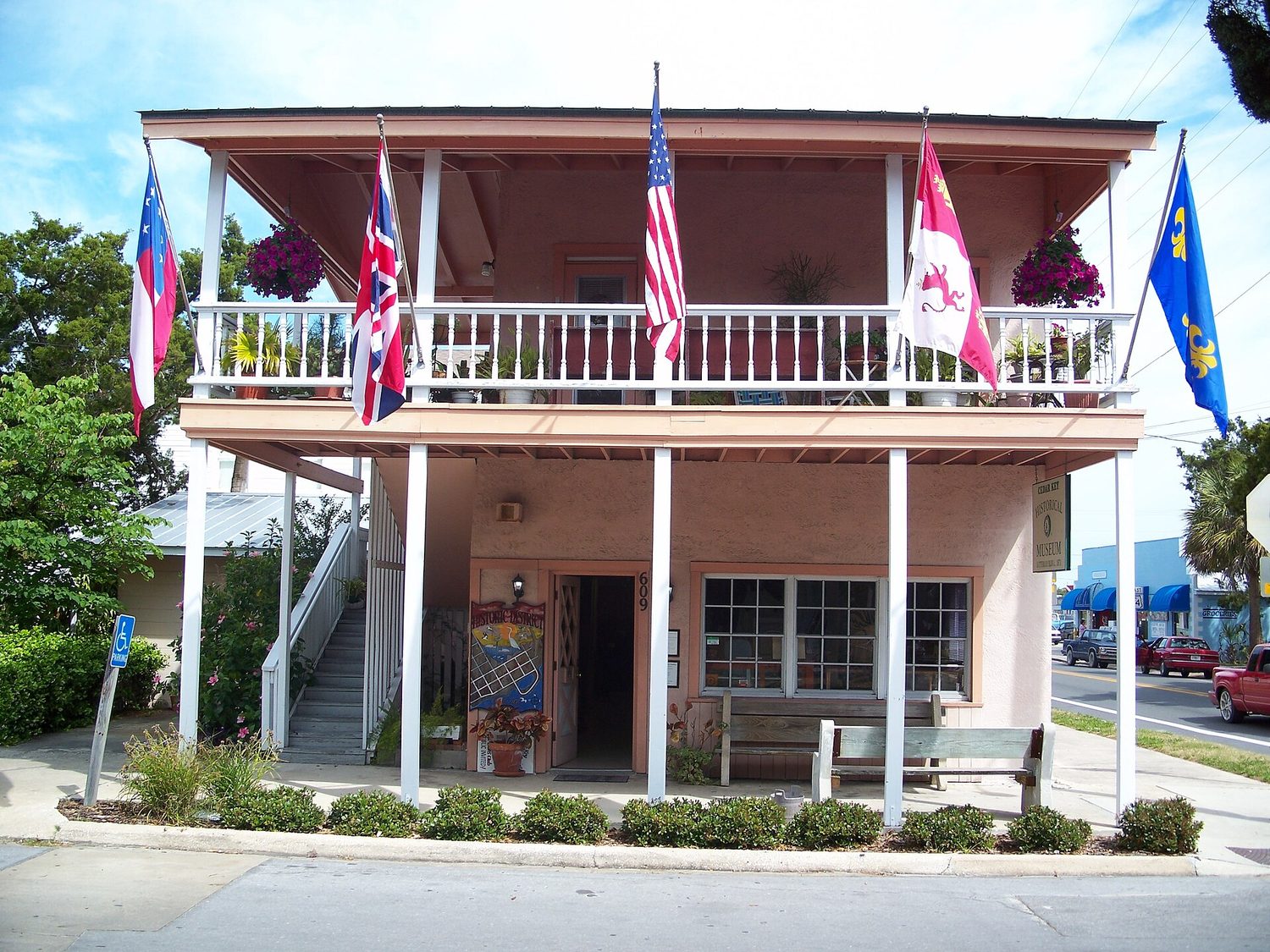
The Only Road In: State Road 24 to Cedar Key
There is only one way in by road: State Road 24, southeast from Gainesville or southwest from Ocala, crossing the peninsula’s scrub and pasture until the land begins to fray. The highway narrows, the shoulders soften, and the last stretch crosses low causeways over shallow bays where the horizon opens to open water. You arrive at a place that feels smaller than its history. The town’s grid is compact, the streets short, the waterfront working rather than polished. Cedar Key was built for industry, not for show. It still looks the part.
Atsena Otie Key: The Original Cedar Key Settlement, Now a Ghost Island
The first organised settlement in the Cedar Keys was not on the town’s current site but on Atsena Otie Key, the island whose Creek name means “cedar island” — the cedar that gave the whole group of keys its name. Augustus Steele bought the military structures there in 1843 for $227, along with title to its 167 acres. The island became the nucleus of the settlement. Today Atsena Otie is accessible only by boat. More than thirty-five houses on its high ground survived the 1896 storm surge that locals still call the tidal wave, but the island was abandoned after the industry collapsed. What remains is a ghost of the first town, reachable by kayak or guided trip, with the old foundations and cisterns half-taken back by scrub.
How the Pencil Industry Built Cedar Key (and the 1896 Storm Ended It)
The cedar that named the keys was the making of the town. The Eberhard Faber mill, set up in 1865, cut red cedar slats for pencils, and by 1886 the 17 sawmills at Cedar Key were turning out nearly half a million board feet a week. This was the wood the world wrote with. Both the Eberhard Faber mill and the Eagle Pencil Company cut pencil slats here until the 1896 hurricane and fire damaged both so badly that they closed soon after. The Eagle Pencil Company site on Way Key at 3rd and G Streets is a vacant lot now, where cedar slats and pencil boxes were once made. The industry did not fade. It was ended by a storm.
Cedar Key Population & Demographics: A Town That Stopped Growing
The numbers describe a town that never regained its industrial population. Cedar Key’s population is 756 people, with a median age of 68.4 years. Of the 819 total housing units, 450 are vacant and 269 are held for seasonal or recreational use. Only about 100 units are occupied by year-round residents. Median household income is $69,226, median home value is $331,100, and median gross rent is $918. The unemployment rate is 4.2 percent, and 49.7 percent of residents hold a bachelor’s degree or higher. This is not a boomtown. It is a place where the boom was cancelled, and the housing stock now serves quiet retirement and seasonal escape.
Cedar Key Seafood Festival & the Rare Chance to Visit Seahorse Key
The town’s present-day life peaks each October, when the Lions Club runs the Cedar Key Seafood Festival: more than 100 arts and crafts exhibits, live music, a Saturday parade at 11am, and local seafood. It is also the rare chance to reach Seahorse Key, a historic island three miles out that is otherwise closed to the public. For one weekend, the town’s quiet is temporarily filled. The festival offers a glimpse of what a working waterfront community looks like when it gathers.
Nearby Festivals: How Cedar Key Compares to Steinhatchee, Perry & More
The contrast with nearby towns is instructive. Steinhatchee, 44 miles away, has its Fiddler Crab Festival. Perry, 76 miles out, hosts the Florida Forest Festival. Dade City, 80 miles distant, celebrates the Kumquat Festival. Mount Dora, 100 miles away, runs an Arts Festival and a Craft Fair. Clermont, also 100 miles out, holds Pig on the Pond. Those towns market their festivals as attractions in themselves. Cedar Key does not. Its festival is smaller, its calendar quieter, and its main draw remains the historical residue — the ghost islands, the vacant pencil factory site, and the water that once carried half a million board feet a week. You come here not for what the town is doing now, but for what the storm stopped it from becoming.
Common questions
- How do I get to Cedar Key?
- Cedar Key sits at the end of State Road 24, about 50 miles southwest of Gainesville. You drive in on a causeway through the marsh. There's no airport on the island; the nearest commercial service is Gainesville Regional or Tampa International.
- Is Cedar Key worth visiting?
- Yes, if you want a working waterfront town that hasn't been rebuilt for tourists. The population is 756, and the median age is 68.4. It's quieter than its history—17 sawmills once cut half a million board feet a week here—but the past is still visible.
- What happened to the pencil mills in Cedar Key?
- The Eberhard Faber mill, set up in 1865, and the Eagle Pencil Company cut red cedar slats here until the 1896 hurricane and fire damaged both so badly they closed soon after. The Eagle site was on Way Key at 3rd and G Streets.
- Can I visit Atsena Otie Key?
- Atsena Otie Key, the first settlement, is accessible by boat. More than 35 houses on high ground survived the 1896 storm surge locals call the tidal wave. There's no ferry service year-round, but the October Seafood Festival offers a rare chance to reach nearby Seahorse Key.
- What's the best time to visit Cedar Key?
- October is a highlight: the Cedar Key Seafood Festival, run by the Lions Club, features arts and crafts, live music, a Saturday parade at 11am, and food like clam chowder and smoked mullet dip. It also offers rare access to Seahorse Key.
- Is Cedar Key expensive to live in or visit?
- Housing is moderate: median home value is $331,100, median gross rent is $918, and median household income is $69,226. But 450 of 819 housing units are vacant, and 269 are seasonal or recreational—so the town feels emptier than its numbers suggest.
Every business named above is one we hold a listing for, and every date traces to a source on our sources page. We do not describe menus, interiors or service we have not verified. Details change — confirm before you travel.