Guides · Cedar Key, Florida
Cedar Key History: Pencil Mills, Ruins & Quiet Streets
Cedar Key's quiet streets and empty lots aren't the sign of a town that never amounted to anything. They're the residue of a boom that ended in a single storm. Read the ruins, and you'll find the town's real story.
How Cedar Key's Pencil Mills Built the Town
It started on Atsena Otie Key, the cedar island that gave the whole group its name. In 1843 Augustus Steele bought the military structures there for $227, along with title to its 167 acres, and that island became the nucleus of the first organized settlement in the Cedar Keys. The cedar milling that followed made the town. The Eberhard Faber mill, set up in 1865, cut red cedar slats for pencils. By 1886, the 17 sawmills at Cedar Key were turning out nearly half a million board feet a week. This wasn't a fishing village that happened to mill a little wood; it was an industrial port whose product the world wrote with. Both the Eberhard Faber mill and the Eagle Pencil Company cut pencil slats here until the 1896 hurricane and fire damaged both so badly they closed soon after.
Visiting Atsena Otie Key: Ruins and the 1896 Tidal Wave
The island first settled is now reachable only by boat or ferry. Worth the crossing. More than thirty-five houses on the high ground survived the 1896 storm surge that locals still call the tidal wave. The interpretive trail lets you walk among their remains—foundations, cisterns, the outlines of rooms—while the scrub reclaims the low ground. This is not a restored historic site; it's an aftermath you can read in the grass and the broken walls. Ferry schedules are irregular and weather-dependent. Plan the day around the tide, not the other way round.
Self-Guided Walking Tour of Cedar Key's Historic Sites
On Way Key, the town's main island, the industrial remnants are less obvious but still legible. Start at the Eagle Pencil Company site at 3rd and G Streets, where cedar slats and pencil boxes were made—now an empty lot that requires a little imagination to populate with saws and stacks of wood. From there, walk to the Cedar Key Historical Society at 609 2nd Street, which holds the photographs and records that fill in what the lots no longer show. Continue to the Cedar Key Railroad Trestle Nature Trail on Grove Street, where the old pilings that once carried timber to the mills still stand in the water.
Cedar Key's Working Waterfront: Where to Eat and Explore
Dock Street is the functional edge of the town, where the working harbor meets the restaurants that serve the catch. Jaybird's Chicken And Dock Street Dips at 491 Dock St and 83 West & 29 North at 83 West at 310 Dock St sit among the boats and the packing houses. Neither pretends to be anything other than what it is: a place to eat near the water, not a postcard of it. Steamers and 2nd Street Cafe, both at 434 2nd St, and Island Room Restaurant and Sand Bar at 192 2nd St round out the practical options. Cedar Key Pizza And Subs at 598 2nd St and FishBonz on Third at 509 3rd St are the casual end of the spectrum. None of these are destinations in themselves. They're the town's working metabolism.
Cedar Key Scrub: Nature Trails and What Replaced the Forests
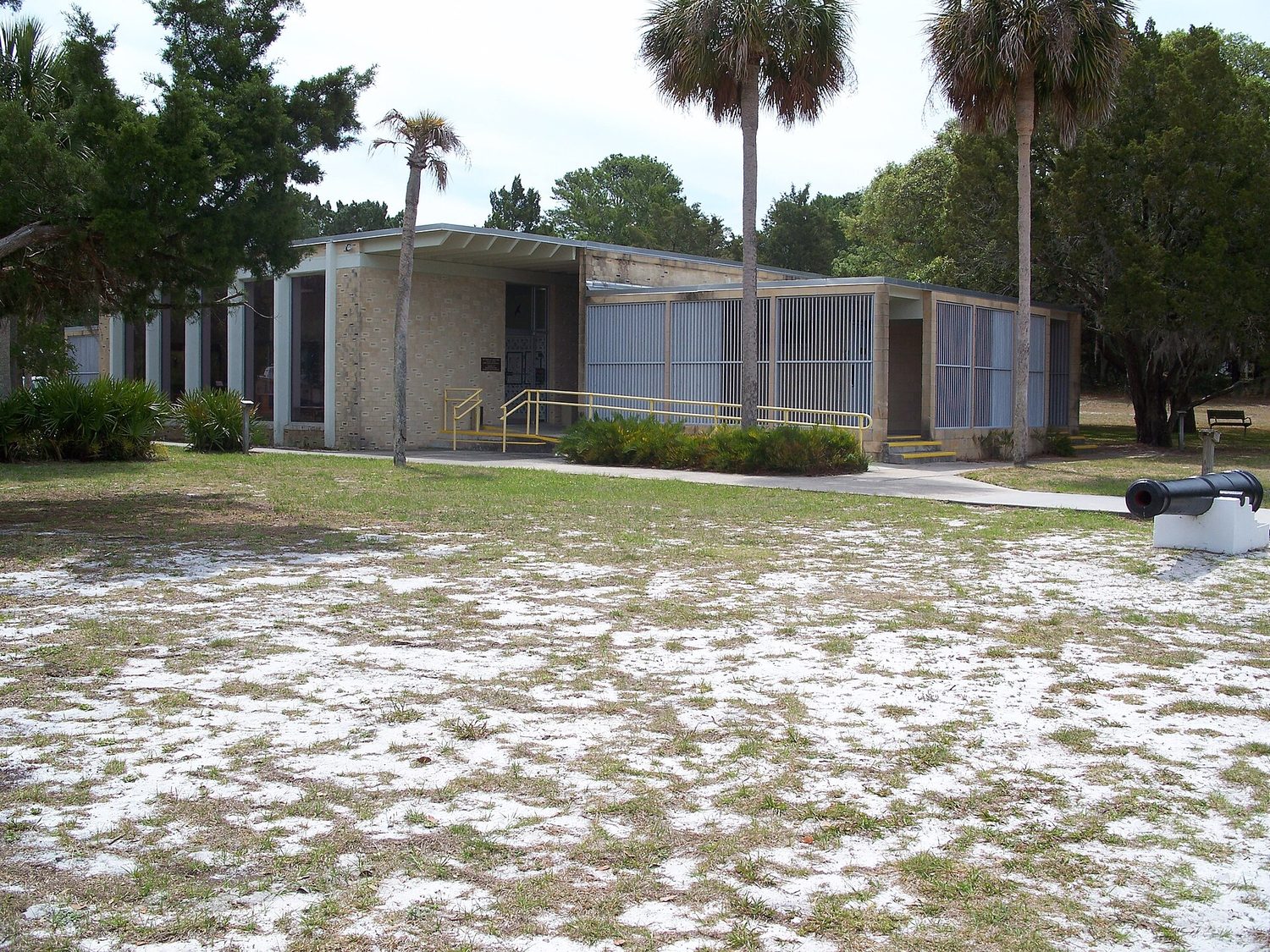
The cedar forests that built the town were logged out, and the land has spent the last century regenerating into something different. The Cedar Key Scrub State Reserve and the adjacent Cedar Key Scrub Wildlife Management Area, both along FL-24, show what replaced the old groves: a low, dense scrub that looks nothing like the pencil-wood forest the mills consumed. A landscape of recovery, not loss—and the truest monument to the industry that nearly stripped it bare. For a shorter stop, City Park at 188 2nd St and Lil Shark Park at 192 2nd St offer green space without the drive. Cedar Key Museum State Park at 12231 SW 166th Ct and the Rosewood Historic Marker nearby give context to the region's deeper and more difficult history.
Cedar Key Today: Quiet Seasons and the Seafood Festival
The census numbers tell the demographic story plainly: 756 people, a median age of 68.4, and 450 vacant housing units out of 819 total—269 of them held for seasonal or recreational use. This is a town that thins out between seasons, and the empty streets are not a failure but a rhythm. The Cedar Key Seafood Festival, run by the Lions Club each October, briefly fills the empty spaces with visitors: more than 100 arts and crafts exhibits, live music, a Saturday parade at 11am, and clam chowder, oysters and smoked mullet dip. It's also the rare chance to reach Seahorse Key, a historic island three miles out that is otherwise closed to the public. If the quiet months feel too empty, the festival is the moment the town swells back to something like its old self.
| Cedar Key's Industrial Past vs. Its Present | |
|---|---|
| Then (1880s–1896) | Now (You Can See) |
| 17 sawmills cutting nearly half a million board feet a week | Empty lots at the Eagle Pencil site on 3rd and G Streets |
| Eberhard Faber and Eagle Pencil mills shipping pencil slats worldwide | Trestle pilings visible at low tide on the Railroad Trestle Nature Trail |
| Cedar forests supplying the mills | Regenerating scrub at the Cedar Key Scrub State Reserve and Wildlife Management Area |
| Atsena Otie Key settled with 35+ houses on high ground | Ruins and interpretive trail on the ferry-accessible island |
| A working industrial port | A working waterfront of restaurants and boats on Dock Street |
Cedar Key is worth visiting now precisely because it is not quaint. The town is smaller than its history, and that is the point: the empty lots, the regenerating scrub, and the vacant houses are the visible record of an industry that ended in a single storm. Read the ruins, walk the trails, and let the scale of what was here—half a million board feet a week—sit against the quiet of what remains.
Common questions
- What is Cedar Key known for?
- Cedar Key was once the heart of the pencil industry, with 17 sawmills producing nearly half a million board feet of red cedar slats weekly by 1886. The Eberhard Faber and Eagle Pencil mills supplied wood for pencils worldwide until the 1896 hurricane shut them down.
- Is Cedar Key worth visiting?
- Yes, Cedar Key offers a quiet, historic coastal experience. With a population of just 756 and a median age of 68.4, it's a small town with nature trails, museums, and highly rated restaurants like Steamers (4.5 stars) and Jaybird's Chicken (4.9 stars). It's ideal for a relaxed getaway.
- What is there to do in Cedar Key?
- You can explore the Cedar Key Historical Society (rated 4.8), walk the Cedar Key Railroad Trestle Nature Trail, or visit Cedar Key Museum State Park. For outdoor time, try Lil Shark Park or Cedar Key Scrub State Reserve. The annual Seafood Festival in October offers arts, music, and access to Seahorse Key.
- Where should I eat in Cedar Key?
- Top-rated spots include Jaybird's Chicken And Dock Street Dips (4.9 stars) and FishBonz on Third (4.9 stars). Steamers and 2nd Street Cafe both rate 4.6, while Island Room Restaurant and Sand Bar has 4.5 stars. For casual fare, Cedar Key Pizza And Subs is solid.
- What happened to the cedar industry in Cedar Key?
- The cedar industry boomed until the 1896 hurricane and fire severely damaged the Eberhard Faber and Eagle Pencil mills, which closed soon after. Before that, 17 sawmills produced nearly half a million board feet weekly, supplying pencil slats to the world.
- Can I visit Seahorse Key?
- Seahorse Key is normally closed to the public, but you can reach it during the Cedar Key Seafood Festival each October, run by the Lions Club. The festival also features over 100 arts and crafts exhibits, live music, and a Saturday parade at 11am.
Every business named above is one we hold a listing for, and every date traces to a source on our sources page. We do not describe menus, interiors or service we have not verified. Details change — confirm before you travel.